Introduction
18 and Life
Introduction
Intro Piece
Song Arrangement
Song Demo
Overdubs
Solo Lesson
Outro
18 and Life
Introduction
Intro Piece
Song Arrangement
Song Demo
Overdubs
Solo Lesson
Outro
Explore More in English Songs








Introduction
Welcome to the bass lesson for Have You Ever Seen the Rain (Smokie version). Originally written by John Fogerty and released by Creedence Clearwater Revival in 1971, this timeless classic has been covered by many artists, including Smokie on their 1995 album The World and Elsewhere.
This lesson is taught by Mike Walker and is set in the key of C with standard tuning. It’s a straightforward yet expressive song, making it perfect for both beginners looking to sharpen their technique and intermediate players who want to refine their timing and feel.
Lesson Breakdown
Mike takes a step-by-step approach to make learning smooth and approachable.
- Intro: The intro starts with a short, tasteful lick that begins on the G string before moving to the low E. Mike also demonstrates a subtle twist here: taking the 5th of the note lower instead of the usual higher, which adds a unique flavor to the line. This is followed by another short lick, carefully broken down so you can catch every nuance.
- Verse: The verse introduces a light hammer-on lick and moves back and forth between the G and C strings. It also includes a simple but effective walking bass line. Mike explains each step slowly, highlighting when to use chromatic movements and when to hold back, making it very beginner-friendly.
- Chorus: In the chorus, Mike divides the section into smaller movements for easier learning. He also explains how to lock in your groove with the guitar and drums to create a tight rhythm section feel.
- Underneath the Guitar Solos: You’ll also learn what’s happening in the bass line beneath the guitar solos. This part involves a subtle kick-drum-inspired rhythm, moving across the frets using four key chords to keep the groove steady.
Once all the sections are covered, Mike ties it all together by playing the full arrangement along with a backing track. This demo helps reinforce everything you’ve learned and is perfect for practising your transitions smoothly.




Similar Metal Songs






Introduction
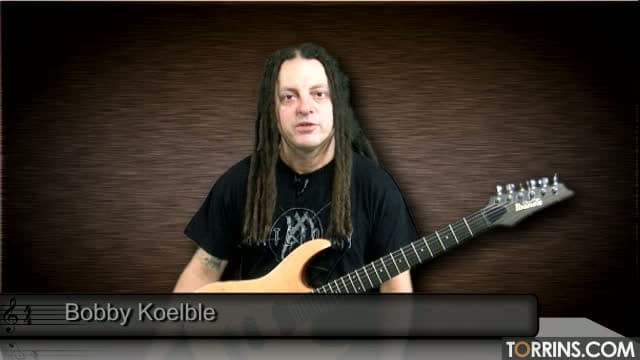
Get ready to master another death metal classic on Torrins—Symbolic by the band Death. This lesson is taught by Bobby Koelble himself, one of the guitarists on the original track. Bobby breaks down the song into several parts, covering essential chords, rhythms, and guitar tones, ensuring a detailed and engaging learning experience.
Fun Fact
Bobby Koelble joined Death after being recommended to Chuck Schuldiner, the band's co-founder, by a friend working at a local music store. Koelble and Schuldiner had known each other since high school in Orlando. After joining the band, Koelble toured with Death across the United States, Canada, Europe, and Japan before the band eventually disbanded.
Chords and Techniques Used in Symbolic
- Tuning: Standard tuning down a whole step
- Key: E minor
- Some of the chords used in this song are G#, F#, Bm, and A7. Tune in to the lesson to know the rest of the chords used in this song.
Song Structure
- Main Riff: The main riff repeats seven times and features vibrato, alternative picking, and palm muting. It includes a few power chords, one being G#.
- Chorus: The chorus riff follows the same pattern as the main riff but repeats 14 times. Tune in to the lesson for a detailed breakdown of the rest of the chorus.
- Solo Section: The solo section features four power chords. In this section, there’s a transition riff as well, which consists of four single notes and a power chord.
- Solo section played by Bobby in the original song: It is played in the key of F# and features chords like B minor, F# power chord, and A7—all diatonic to F#. He breaks down the solo into three sections: beginning, middle, and end and shares valuable tips on mastering the solo, including his creative process behind crafting the iconic riff.
Bobby plays all elements slowly, first to make it easier to follow, then repeats them at normal speed. He also explains the guitar tone in detail.
Why Learn Symbolic?
This lesson provides a detailed breakdown of one of death metal’s most iconic tracks. Bobby Koelble’s insight into the composition and technique will help you refine your alternative picking, palm muting, and power chord transitions. It's a challenging yet rewarding song to master for any metal guitarist. If you’re an advanced player or an intermediate player looking for songs to improve your techniques, this song has to be in your repertoire.
Tips to Improve Your Playing
- Start by playing the riffs at a slower pace, then gradually increase your speed.
- Pay close attention to the vibrato and palm muting techniques to capture the song’s unique tone.
- Focus on smooth chord transitions during the solo to maintain the song’s flow.
FAQs – Symbolic Guitar Lesson
Q1. Is this song suitable for beginners?
Ans: This lesson is recommended for intermediate to advanced players due to its fast-paced riffs and complex solos.
Q2. What tuning is used for this song?
Ans: The song is played in standard tuning down a whole step.
Songs with Similar Difficulty



Introduction
Get ready to master another hit song on Torrins—If It's Love by Train. This moderate-level lesson is taught by Steve Luciano, who breaks down the song into easy-to-follow sections. You'll learn about the chords, strumming patterns, and intricate techniques that make this song so engaging. Steve also shares detailed tips on finger placements and rhythm to help you recreate the authentic feel of the original track.
Fun Fact: If It's Love was written on the same day as Train's hit Hey, Soul Sister in New York City. Pat Monahan wrote it as a love song for the band's long-time fans, thanking them for their unwavering support over the years.
Chords Used in If It's Love
The song is tuned half a step down and features a mix of standard and suspended chords. Some of the key chords used include:
- G triad
- G chord
- Gsus4
- Csus4
- D4
- Dsus/F#
- G/B
Tune in to the lesson to learn the other chords that make up this song. Steve carefully explains the finger placements for these chords, especially complex chords like Dsus/F#, to ensure you get the right tone.
Strumming Pattern
The song starts with a drum section, and Steve demonstrates how to simulate that drum feel using strumming techniques.
- In the beginning, the rhythm follows a 16th note pattern: DUDUDUD
- As the song progresses, the pattern shifts to: DDUUUD
Steve emphasises the importance of keeping your right hand moving to maintain a consistent rhythm. He also explains how to incorporate sliding and arpeggios into your strumming to enhance the song's texture.
Song Structure
If It's Love follows a clear and structured format. Tune in to the lesson to understand the arrangement of the song.
In the beginning, Steve uses just 3–4 chords, making it approachable for most players.
As the song progresses, he introduces more complex chords like Dsus/F#, adding depth to the arrangement
Steve concludes the lesson by playing along with the song, demonstrating smooth transitions between sections.
Improvisation Techniques
For more advanced players, Steve teaches how to improvise over the progression using slides and arpeggios. He also explains how to replicate the original feel of the song by experimenting with the rhythm and strumming intensity.
Why Learn If It's Love?
This song is an excellent way to improve your chord transitions and rhythm skills. It also introduces suspended chords and alternate fingerings, helping you build greater versatility in your playing.
Tips to Control Strumming Intensity:
- Keep the beginning section light with gentle strumming.
- Add more intensity in the chorus by strumming harder and using accents.
- Maintain a steady rhythm throughout the song to keep the groove intact.
FAQs – If It's Love Guitar Lesson
Q1. How can I improve my rhythm and timing?
Practice with the backing track and focus on Steve’s tips for simulating the drum section with your strumming.
Q2. Do I need to tune down my guitar?
Yes, the song is tuned half a step down for an authentic sound.
Q3. How can I handle the suspended chords more smoothly?
Steve suggests specific finger placements and transitions to make switching between suspended chords easier.



Introduction:
Torrins brings you another heartfelt guitar song lesson I Will Be Here by Steven Curtis Chapman, taught by J.J. Pattishall. This lesson focuses on fingerpicking, chord transitions, and rhythm techniques, making it a great song to develop both your picking accuracy and emotional expression.
Interesting Fact: This song carries deep personal meaning. Chapman wrote it as a promise to his wife during a difficult time when his parents were going through a divorce. It became one of his most beloved songs, offering reassurance and commitment through its lyrics and melody.
Chords & Song Structure
This lesson breaks the song into easy-to-follow sections: Intro & Verse, Chorus, Bridge, Song Demo, Rhythm, and Sing & Play.
Capo is on the 1st fret
Key used is D (relative to capo), actual tuning is Eb
Chords Used:
- Intro & Verse: Dsus2, A7sus4, Bm (a barre chord), Em7, and others
- Chorus: Bm/A, A/G, D/F#, and more
- Bridge: Includes a diminished chord and a piano/instrumental section
J.J. shares some alternatives for the difficult chords such as barre chords.
The chords are arpeggiated, giving the song its signature flow. J.J. carefully explains finger placement and picking techniques to help you achieve the song’s delicate feel.
Fingerpicking & Rhythm Patterns
This song features a beautiful fingerpicking pattern. J.J. breaks it down in detail, ensuring that even beginners can grasp the technique.
For those who find fingerpicking challenging, he also introduces two basic rhythm patterns as an alternative:
- DDUDDUDDUD – A straightforward strumming pattern
- DDUUDDDUUD – Adds syncopation for a more dynamic feel
Verse, Chorus & Bridge Breakdown
- Intro & Verse: J.J. carefully walks through the arpeggiated chords and explains how to maintain a steady rhythm. He also shares a technique to create a flowing fingerpicking style.
- Chorus: The transitions between chords like Bm/A, F#, A/G, and D/F# are broken down step by step. He highlights turnarounds, ensuring smooth movement between sections.
- Bridge: Features a diminished chord, adding tension and resolution to the song. J.J. also explains the piano and instrumental section.
Sing & Play – Coordinating Vocals & Guitar
This lesson doesn’t just teach you how to play the guitar part—it also helps you combine playing with singing. J.J. explains:
- How to sync your strumming or fingerpicking with the lyrics
- Phrasing techniques to match the melody with chord changes
- How to make the song your own while staying true to its essence
Final Song Demo & Play-Along
To bring everything together, J.J. performs the song with a backing track, reinforcing all the techniques covered in the lesson. This play-along section lets you practice along and refine your timing and transitions.
Why Learn I Will Be Here?
- Develops fingerpicking skills – great for improving coordination and technique
- Enhances chord transitions – teaches smooth movement between complex shapes
FAQs – I Will Be Here Guitar Lesson
Q1: Is this lesson beginner-friendly?
Yes! While the fingerpicking and chord shapes may seem tricky at first, J.J. provides simplified alternatives and a step-by-step breakdown.
Q2: Can I strum instead of fingerpick?
Absolutely. J.J. introduces two strumming patterns for those who prefer a rhythmic approach.
Q3: Do I need a capo?
Yes, place the capo on the 1st fret to match the song’s key.