Highway Star
Introduction
Song Arrangement Part 1
Song Arrangement Part 2
Song Demo
Solo Lesson
Organ Solo
No Description Available
Highway Star
Introduction
Song Arrangement Part 1
Song Arrangement Part 2
Song Demo
Solo Lesson
Organ Solo
Explore More in English Songs









Introduction
Get ready to master another hit song on Torrins—If It's Love by Train. This moderate-level lesson is taught by Steve Luciano, who breaks down the song into easy-to-follow sections. You'll learn about the chords, strumming patterns, and intricate techniques that make this song so engaging. Steve also shares detailed tips on finger placements and rhythm to help you recreate the authentic feel of the original track.
Fun Fact: If It's Love was written on the same day as Train's hit Hey, Soul Sister in New York City. Pat Monahan wrote it as a love song for the band's long-time fans, thanking them for their unwavering support over the years.
Chords Used in If It's Love
The song is tuned half a step down and features a mix of standard and suspended chords. Some of the key chords used include:
- G triad
- G chord
- Gsus4
- Csus4
- D4
- Dsus/F#
- G/B
Tune in to the lesson to learn the other chords that make up this song. Steve carefully explains the finger placements for these chords, especially complex chords like Dsus/F#, to ensure you get the right tone.
Strumming Pattern
The song starts with a drum section, and Steve demonstrates how to simulate that drum feel using strumming techniques.
- In the beginning, the rhythm follows a 16th note pattern: DUDUDUD
- As the song progresses, the pattern shifts to: DDUUUD
Steve emphasises the importance of keeping your right hand moving to maintain a consistent rhythm. He also explains how to incorporate sliding and arpeggios into your strumming to enhance the song's texture.
Song Structure
If It's Love follows a clear and structured format. Tune in to the lesson to understand the arrangement of the song.
In the beginning, Steve uses just 3–4 chords, making it approachable for most players.
As the song progresses, he introduces more complex chords like Dsus/F#, adding depth to the arrangement
Steve concludes the lesson by playing along with the song, demonstrating smooth transitions between sections.
Improvisation Techniques
For more advanced players, Steve teaches how to improvise over the progression using slides and arpeggios. He also explains how to replicate the original feel of the song by experimenting with the rhythm and strumming intensity.
Why Learn If It's Love?
This song is an excellent way to improve your chord transitions and rhythm skills. It also introduces suspended chords and alternate fingerings, helping you build greater versatility in your playing.
Tips to Control Strumming Intensity:
- Keep the beginning section light with gentle strumming.
- Add more intensity in the chorus by strumming harder and using accents.
- Maintain a steady rhythm throughout the song to keep the groove intact.
FAQs – If It's Love Guitar Lesson
Q1. How can I improve my rhythm and timing?
Practice with the backing track and focus on Steve’s tips for simulating the drum section with your strumming.
Q2. Do I need to tune down my guitar?
Yes, the song is tuned half a step down for an authentic sound.
Q3. How can I handle the suspended chords more smoothly?
Steve suggests specific finger placements and transitions to make switching between suspended chords easier.


Similar Rock Songs


Introduction
Tune into a classic Pink Floyd guitar lesson on Wish You Were Here at Torrins.com, led by our experienced tutor, Mike Dugan. He breaks down the lesson into various sections: Introduction, Intro Chords & Rhythm, Intro Lead, Verse & Chorus Lesson, Solo Improvisation, Arrangement & Playing with Backing Track.
Interesting Fact: In the song's intro, you can hear David Gilmour coughing and breathing heavily before the guitar kicks in. Rumour had it that Gilmour’s smoking habit caused the cough, and that he quit smoking afterwards out of frustration with the recording. But Gilmour later clarified he never smoked!
Mike plays the song using various open chords, including Em, Em7, G, A, and Am. Tune into the complete lesson to learn the rest of the chords that make up this song. This song is a great choice for both beginners and intermediate players.
Chords Used in "Wish You Were Here" Guitar Lesson
This song is played using simple open chords, making it accessible for both beginners and intermediate players. For intermediate players, Mike introduces some alternate chord voicings to stay true to the song’s original sound while adding a unique touch.
Strumming Pattern
The strumming pattern is beginner-friendly with consistent downstrums. For those wanting to level up, Mike shares an advanced rhythm that incorporates upstrums for a more dynamic feel.
Song Structure
"Wish You Were Here" follows a clear and structured arrangement:
- Intro: Lead + rhythm section (Mike provides a simpler alternative for beginners)
- Lead Riffs: Based on the E minor pentatonic scale and its extensions, featuring double stops and hammer-ons.
- Verse 1: Smooth chord transitions; beginners can use downstrums, while advanced players can follow the more complex rhythm.
- Solo: You can either repeat the intro solo or follow Mike’s improvisation using the E minor pentatonic scale.
- Verse 2: Similar to Verse 1, with consistent strumming and clean transitions.
- Final Solo: A concluding solo based on the intro lead and E minor pentatonic improvisation.
Improvisation Techniques
Mike teaches how to improvise using the E minor pentatonic scale. He also adds his own flair by playing it on the 12th fret in true David Gilmour style.
Singing Along
Mike also walks you through the singing component, helping you match the chord changes with the lyrics.
Pro Tip: Make use of tabs and lyrics for smoother learning.
Why Learn "Wish You Were Here"?
This lesson helps you improve your chord transitions and develop a smooth, expressive playing style. It's a great piece to master for solo and sing-along sessions. Plus, learning David Gilmour’s style will sharpen your improvisation skills.
Tips to Improve:
- Focus on clean chord transitions.
- Keep your strumming hand relaxed to maintain a steady rhythm.
FAQs – "Wish You Were Here" Guitar Lesson
Q1. Is this song beginner-friendly?
Yes! The chords are straightforward, and Mike provides a simplified version of the intro for beginners.
Q2. Can I just strum the song instead of fingerpicking?
Yes! You can simplify the song with consistent downstrums or follow the more advanced strumming pattern Mike shares.

Introduction:
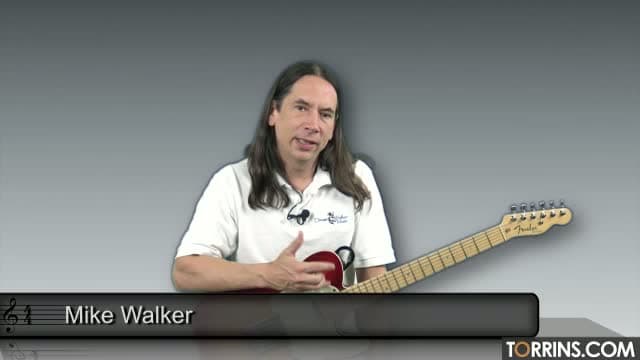
Torrins brings you one of the most legendary rock riffs ever recorded-Smoke on the Water by Deep Purple, taught by Mike Walker. This guitar lesson is designed to break down the song step by step, covering everything from the iconic riff to solo improvisation. Whether you’re picking up the electric guitar for the first time or looking to level up your playing, this one’s a must-learn.
Fun Fact: Although the song appeared on Machine Head in 1972, it wasn’t released as a single until 1973. Surprisingly, the band didn’t expect it to be a hit. But it climbed to number 4 on the Billboard pop charts and became one of the most recognizable riffs in rock history.
Chords and Song Key
This lesson is taught in the key of B♭, but the song carries a G minor feel throughout. You’ll be using a few essential power chords like G5, A♭5, and others as you move through the sections.
The song’s time signature is 4/4, with a tempo of 112 BPM. Two main scales are used across the lesson: the G minor scale and the G blues pentatonic, both of which are central to the solo and improvisation parts.
Iconic Intro Riff
It’s the riff that every guitarist wants to play and for good reason. Mike breaks it down clearly, explaining which strings to let ring and how to get that gritty rock tone. He demonstrates both fingerpicking and pick-style playing, so you can choose the approach that suits you best.
Verse and Chorus Sections
In the verse, you’ll be working with a group of three chords, using arpeggios and palm muting to add texture. The phrasing follows a clean 4-bar structure, making it easy to follow.
The chorus section also relies on arpeggios. Mike walks through each measure in detail, grouping chords and explaining the rhythm so you can play with ease and confidence.
Rhythm Underneath the Solo
For the rhythm guitar players, Mike breaks down the part that supports the solo section. This part mostly uses just two chords, but involves some precise fingerpicking techniques to maintain the groove and drive.
Solo Lesson
Mike takes you through the solo lick by lick, staying in the G minor scale. He explores techniques like vibrato to add feel and energy. It’s a great way to learn how to play expressively.
Solo Demo and Improvisation
Once the solo is broken down, Mike ties everything together with a full solo demo played along with a backing track. Then comes the fun part, improvisation. He shares how to use:
- G minor and G pentatonic scales
- G pentatonic with a flat 5
- Phrasing on the 15th fret
You’ll also pick up a few stylistic ideas inspired by Jon Lord’s playing style, which adds a cool, classic-rock flavor to your soloing.
Why Learn - Smoke on the Water?
- One of the most famous riffs in rock history
- Teaches you both rhythm and lead techniques
- A solid introduction to rock improvisation
- Perfect for building confidence on the electric guitar
FAQs – Smoke on the Water Guitar Lesson
Q1. Is this song beginner-friendly?
Yes, and Mike simplifies each section so it’s approachable even if you’re just getting started.
Q2. Do I need an electric guitar?
It’s recommended, as this song is designed with electric tone and expression in mind.
Q3. Can I play the riff with a pick?
Absolutely. Mike shows both finger and pick methods—you can choose what feels right.



Songs with Similar Difficulty






Introduction:
Torrins brings you an electrifying guitar lesson—Symphony of Destruction by Megadeth, taught by Clay Foster. This heavy-hitting metal track is part of our guitar song lesson series and is broken down into easy-to-follow sections.
Fun Fact: In an interview, vocalist Dave Mustaine shared that the lyrics for Symphony of Destruction were sparked by a headache he got while driving home. He scribbled the first lines on the back of a sushi receipt—“My metal brain’s corroding, my head is going to explode.” That spontaneous moment led to one of Megadeth’s most iconic songs, recorded on their fifth studio album Countdown to Extinction in 1992.
Song Arrangement
The song is taught in separate segments so you can master each part before moving to the next.
The song is in the key of E.
Verse
Verse is built around the F power chord and an open E power chord, along with other chords.
Downstrokes and palm muting are used in the verse—make sure to mute the strings to avoid letting notes ring out too long. Clay shares techniques like using your thumb or extra fingers to stop the sound cleanly.
Pre-Chorus
Features open palm muting and chromatic downs, creating that tight, chugging rhythm. Our lessons have a 3-angle video setup so you can clearly see hand positions and copy along easily.
Chorus
This section opens up with ringing E chords and a chromatic descending run. Chords like Bb, G#, and the D power chord makes the chorus sound more intense. Though it’s slightly more complex than the verse, Clay carefully breaks down the finger positioning and covers some fingerpicking techniques to help you through it.
After the first chorus, the main riff returns and leads into the second verse and pre-chorus, just like earlier.
The second chorus is a bit longer. The first half mirrors the first chorus, while the second half introduces new elements. Clay walks you through the difference so you can follow along confidently.
Solo Lesson
Clay breaks down the guitar solo into manageable sections.
- The first part has a bluesy riff with vibrato, bending, and palm muting.
- The second part is a 16-note rhythmic figure built around the Am6 chord, featuring some sliding techniques.
- Tune into the lesson to learn each section in detail and pick up essential phrasing skills along the way.
Sound and Tone
To capture the song’s feel, Clay dives into the tone settings. The tone is mid-rangy, which is a signature sound of Marty Friedman. Clay recommends listening to some of Friedman’s work to understand the sweet, expressive tone he’s known for.
For gear settings, Clay suggests using the middle pickup to replicate that tone more accurately.
Song Demo
The lesson wraps up with a full song demo, where Clay ties everything together. You can play along with him to practice transitions, polish your technique, and check your accuracy in real time.
FAQs – Symphony of Destruction Guitar Lesson
Q1: Is this song beginner-friendly?
Yes. While it has a few technical sections, the lesson breaks everything down clearly and provides enough guidance for newer players.
Q2: Do I need specific gear for the tone?
Clay suggests using a mid-range-focused setting with the middle pickup to get closer to Marty Friedman's tone. However, you can start with what you have and tweak as needed.
Q3: Is the solo hard to learn?
It’s approachable when broken into parts. Clay walks you through each phrase, so with some practice, you’ll be able to nail it.