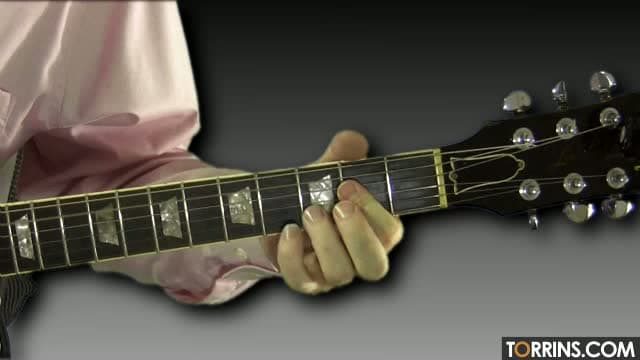
Introduction
Hotel California - Introduction
Welcome to the guitar lesson on the acoustic version of one of the greatest songs of all time, Hotel California by The Eagles. This specific arrangement replaces the original electric instruments with nylon-string guitars, creating a different interpretation of the song. The track keeps the same chord progression and structure as the studio version but uses fingerpicking patterns and multiple guitar harmonies.
Hotel California, as writer Henley put it, is more of a symbolic piece about America in general, and added, “Lyrically, the song deals with traditional or classical themes of conflict: darkness and light, good and evil, youth and age, the spiritual versus the secular. I guess you could say it's a song about the loss of innocence”.
The song follows a narrative about a traveller staying at a mysterious hotel, with lyrics that some interpret as commentary on American culture, for instance, the most iconic line of the song being “you can check out anytime you like, but you can never leave”.
Hotel California Guitar Lesson
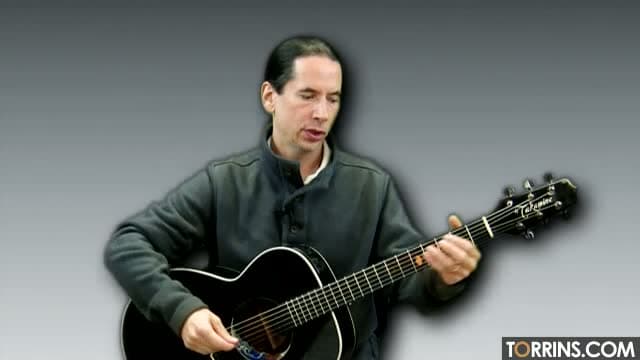
Hotel California guitar lesson is taught by our beloved expert, Mike Walker, who explains all the different sections of the song in a section-by-section manner, starting from the intro that talks about the chords and different voicings of those chords, through the acoustic overdubs and the guitar solo section.
The song features a number of minor 7ths, dominants, suspended and augmented chords. The intro alone covers all these variations of these chords. The tutor, nevertheless, goes into detail explaining how to play them using a fingerpicking pattern.
The song is written in B minor; the live acoustic version uses a capo on the 7th fret, making it an E minor. The intro follows a repeating progression of Em-B7-Dsus-A7-C-G-Am7-B7, which establishes the harmonic foundation.
Since this is an acoustic version of the song, played by multiple guitarists. There are a number of artistic motifs and embellishments using techniques like double stops, arpeggios, and most importantly, the individual guitarists harmonising with each other throughout the song.
The tutor explains all the solos of the song in great detail, the last of which features some of the notes from the harmonic minor scale, which carry a signature sound of the desert, or the Middle East. This lends itself literally to the theme of the narrative of the song.
FAQs
Q. Do I need a nylon-string guitar to play this version?
While the original recording uses nylon strings, you can play it on a steel-string acoustic. The tone will sound brighter, but the chords and techniques remain the same.
Q. Why is the capo on the 7th fret? Can I play it without one?
The capo transposes the chords to match the original key (B minor) and allows easier open-position shapes. Without a capo, you’ll need to play full barre chords in B minor.
Hotel California (Hell Freezes Over Album Live)
Introduction
Song Arrangement and Arpeggios
Song Demo
Intro Solo-Part 1
Intro Solo-Part 2
Intro Solo-Part 3
Acoustic Overdub-Part 1
Acoustic Overdub-Part 1-Response
Acoustic Overdub-Part 2
Acoustic Overdub-Part 3
Acoustic Overdub-Part 4
Acoustic Overdub-Part 5
Final Solo-Part 1
Final Solo-Part 2
Final Solo-Part 3
Final Solo-Part 4
Hotel California - Introduction
Welcome to the guitar lesson on the acoustic version of one of the greatest songs of all time, Hotel California by The Eagles. This specific arrangement replaces the original electric instruments with nylon-string guitars, creating a different interpretation of the song. The track keeps the same chord progression and structure as the studio version but uses fingerpicking patterns and multiple guitar harmonies.
Hotel California, as writer Henley put it, is more of a symbolic piece about America in general, and added, “Lyrically, the song deals with traditional or classical themes of conflict: darkness and light, good and evil, youth and age, the spiritual versus the secular. I guess you could say it's a song about the loss of innocence”.
The song follows a narrative about a traveller staying at a mysterious hotel, with lyrics that some interpret as commentary on American culture, for instance, the most iconic line of the song being “you can check out anytime you like, but you can never leave”.
Hotel California Guitar Lesson
Hotel California guitar lesson is taught by our beloved expert, Mike Walker, who explains all the different sections of the song in a section-by-section manner, starting from the intro that talks about the chords and different voicings of those chords, through the acoustic overdubs and the guitar solo section.
The song features a number of minor 7ths, dominants, suspended and augmented chords. The intro alone covers all these variations of these chords. The tutor, nevertheless, goes into detail explaining how to play them using a fingerpicking pattern.
The song is written in B minor; the live acoustic version uses a capo on the 7th fret, making it an E minor. The intro follows a repeating progression of Em-B7-Dsus-A7-C-G-Am7-B7, which establishes the harmonic foundation.
Since this is an acoustic version of the song, played by multiple guitarists. There are a number of artistic motifs and embellishments using techniques like double stops, arpeggios, and most importantly, the individual guitarists harmonising with each other throughout the song.
The tutor explains all the solos of the song in great detail, the last of which features some of the notes from the harmonic minor scale, which carry a signature sound of the desert, or the Middle East. This lends itself literally to the theme of the narrative of the song.
FAQs
Q. Do I need a nylon-string guitar to play this version?
While the original recording uses nylon strings, you can play it on a steel-string acoustic. The tone will sound brighter, but the chords and techniques remain the same.
Q. Why is the capo on the 7th fret? Can I play it without one?
The capo transposes the chords to match the original key (B minor) and allows easier open-position shapes. Without a capo, you’ll need to play full barre chords in B minor.
Hotel California (Hell Freezes Over Album Live)
Introduction
Song Arrangement and Arpeggios
Song Demo
Intro Solo-Part 1
Intro Solo-Part 2
Intro Solo-Part 3
Acoustic Overdub-Part 1
Acoustic Overdub-Part 1-Response
Acoustic Overdub-Part 2
Acoustic Overdub-Part 3
Acoustic Overdub-Part 4
Acoustic Overdub-Part 5
Final Solo-Part 1
Final Solo-Part 2
Final Solo-Part 3
Final Solo-Part 4
Explore More in English Songs




Introduction:
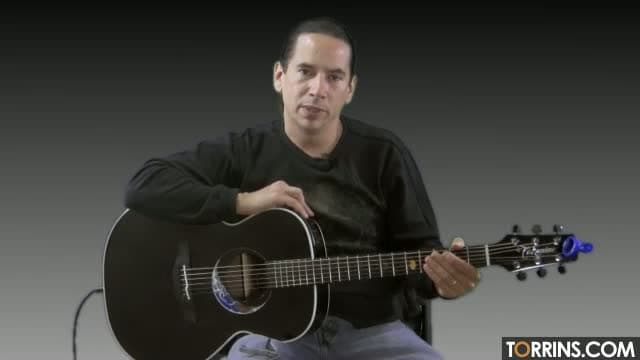
Torrins brings you an exciting guitar lesson "Just The Way You Are" by Bruno Mars, taught by expert instructor Mike Walker. This beautiful and heartfelt song is known for its simplicity and emotional depth, making it a great choice for both beginners and intermediate players. In this lesson, you'll learn two different ways to play this song with and without a capo along with essential strumming techniques and dynamics.
Fun Fact: "Just The Way You Are" was Bruno Mars' debut solo single, earning him the Grammy Award for Best Male Pop Vocal Performance at the 53rd Annual Grammy Awards. This song marked the beginning of his rise to global stardom!
Chords Used in Just The Way You Are Guitar Lesson
With Capo (3rd fret):
- Mike demonstrates how to play the song with chords like Bm, Double Stack G, and others.
- The non-capo version of the song includes just a handful of chords, with one being a barre chord (Bm). However, Mike Walker demonstrates an easy way to play it, making it accessible for all skill levels.
Without Capo:
- Bb (barre chord), F, and others.
- This version features slightly trickier chord shapes, but the lesson breaks down smooth transitions between them.
Strumming Pattern
The song follows a consistent and simple strumming pattern: DDDUDUDD.
Mike explains how to approach string roots and strumming accents to enhance your playing. Tune in to the lesson to learn these techniques in detail.
Pro Tip: Since the song is highly repetitive, dynamics play a crucial role. Dynamics keep the song engaging and expressive. The verse is played slightly louder than the chorus to create contrast and keep the song engaging.
Capo vs. Non-Capo Version
This lesson provides two approaches:
- Capo Version: A beginner-friendly arrangement with simple chord transitions.
- Non-Capo Version: A slightly more advanced version with barre chords and intricate transitions.
Mike plays both versions along with a backing track to help tie everything together. The lyrics provided with the guitar tutorial help you follow along seamlessly, making it easier to match your playing with the vocal phrasing and timing.
Why Learn Just The Way You Are?
This lesson is perfect for players who want to master song dynamics and strumming consistency. You'll also gain experience with barre chords, making it a great stepping stone toward more advanced playing.
FAQs – Just The Way You Are Guitar Lesson
Q1. Is this song beginner-friendly?
A: Yes! The capo version makes it accessible, while the non-capo version challenges intermediate players.
Q2. Do I need a capo?
A: No, but the capo version simplifies chord shapes and makes the song easier to play.
Q4. What if I struggle with the barre chords?
A: Mike demonstrates easy ways to tackle the barre chords and some tips for smooth transitions and finger positionings.

Similar Rock Songs


Introduction
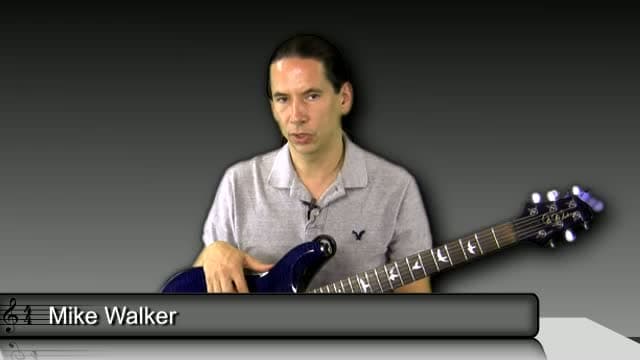
Tune into Torrins’ guitar song lesson on the iconic single by American rock band Guns N' Roses, Sweet Child O’ Mine. This chart-topping hard rock song is taught by our instructor, Mike Walker. He has broken down the lesson into 10 parts for a detailed understanding of each section and to make learning easier. Find dedicated lessons on the intro, verses, choruses, interlude solos, main solo, and outro.
Fun Fact: "Sweet Child O' Mine" was born out of a playful jam session at the band’s house. Slash was fooling around with a "circus" melody to make drummer Steven Adler laugh when Izzy Stradlin suggested turning it into a song. Within an hour, the band had crafted the core structure, and Axl Rose, inspired by his girlfriend Erin Everly, wrote the heartfelt lyrics by the following afternoon.
Chords Used in Sweet Child O' Mine Guitar Lesson
This song is played in half-step down tuning and features a mix of open chords and power chords. Some of the key chords used in the song include:
- C, D, Cadd9
- A power chord, Dsus4
Tune into the full lesson to learn all the chords and how to transition between them seamlessly.
Strumming Pattern
- Intermediate/advanced rhythm: Alternating strumming pattern with pull-off techniques for added depth
- A lick is layered over the chorus, and Mike walks you through how to blend it into the song smoothly
Song Structure
This song follows a well-defined verse-chorus format:
- Intro Riff – The iconic opening lick is based on a repetitive motion with just the first note changing. It’s repeated twice.
- Verse 1 & 2 – Follows an 8-bar phrase played twice using three chords. Incorporates a pull-off pattern. Mike breaks down the intricacies of the verses in great detail.
- Chorus – Mix of power chords and open chords like A power chord, C5, and Dsus4. A lick is played over the chorus for added texture.
- Solo 1 – The rhythm underneath the solo is half the length of the verse.
- Verse 2 – Similar to Verse 1.
- Chorus 2 – Same as Chorus 1.
- Solo 2 – A longer solo covering an entire verse.
- Chorus 3 – Double the length of the previous choruses.
- Outro Solo – Includes wah-wah pedal, hammer-ons, pull-offs, sliding, and some resting measures for dynamic effect.
Why Learn Sweet Child O' Mine?
This lesson covers not just the guitar parts but also the feel and dynamics that make the song iconic.
- Learn the nuances of Slash’s soloing style
- Improve your pull-offs and hammer-ons
- Master playing with a wah-wah pedal for expressive control
FAQs – Sweet Child O' Mine Guitar Lesson
Q1. Is this song beginner-friendly?
Ans: This lesson is ideal for intermediate and advanced players.
Q2. What’s the trick to mastering the intro riff?
Ans: Focus on the repetitive pattern and ensure the other strings are muted for a clean sound.


Introduction
Tune in to a detailed guitar song lesson on What It’s Like, a single by the American musician, Everlast. This 1998’s release was the lead single from his second studio album called Whitey Ford Sings the Blues.
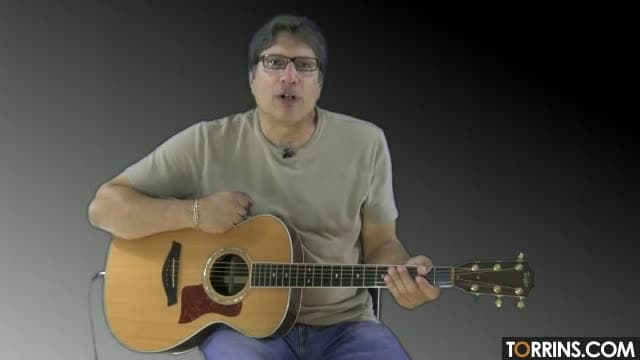
This guitar song lesson is taught by Mike Walker, an experienced musician and instructor at Torrins. He breaks the lesson down into sections: Introduction, Intro Chord Progression, Verse & Chorus, Arrangement, Interlude, and Outro.
Mike Walker teaches the What It’s Like Song guitar lesson using just 3 chords, two of which are Dm and C. No capo is needed!
Chords Used in What It's Like Guitar Lesson
- This song primarily revolves around three simple chords, making it accessible for players of all levels.
- The strumming pattern follows a DDU rhythm, adding a steady groove.
Strumming & Picking Techniques
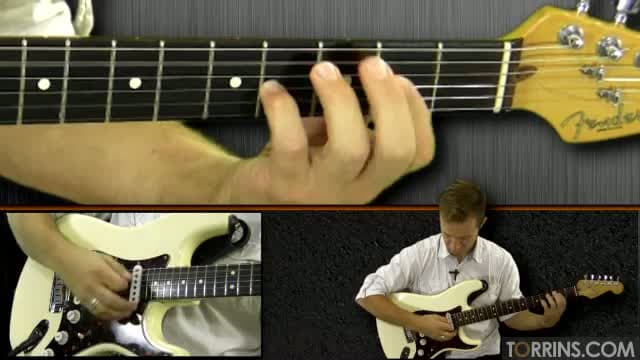
The song subtly blends strumming and arpeggiation, giving it a dynamic and textured feel. The intro is centered around a D minor chord, with the occasional addition of Dsus4 to introduce subtle variation. Arpeggiated picking is used here to create a melodic and flowing texture, setting the tone for the rest of the song.
In the verse, the D minor chord continues to anchor the progression, while an arpeggiated riff adds depth and makes it more rhythmic.
Moving into the chorus, the strumming follows a consistent DDU (Down-Down-Up) pattern, repeated four times. On the fourth repetition, however, there’s a variation introduced at the end which is a distinctive 8-note strum pattern that adds energy and creates a pumping, driving effect.
Song Structure & Arrangement
The song builds gradually, with familiar sections repeating and subtle changes keeping things interesting. Here's a simple breakdown of how the song flows:
- Intro: A catchy opening riff sets the mood and is played four times.
- Verse 1: The main melody kicks in and repeats six times, helping you settle into the groove.
- Chorus: This part brings in energy. It’s played four times, with a twist added on the fourth round to keep things fresh.
- Interlude: A gentle picking section gives you a short breather before heading back into the main theme.
- Verse 2: Similar to the first verse, but extended — this time it's played eight times.
- Chorus: Returns with the same pattern, repeated four times.
- Bridge: Feels like a throwback to the intro, but with a longer run — played six times.
- Verse 3: Back again for eight repetitions.
- Final Chorus: Played three times as the song winds down.
- Outro: The song gradually fades out, giving it a smooth ending.
Mike shares a tip for those struggling with Fmaj7? Try leading with your third finger—this helps you get the note covered first, giving you an extra split second to position the rest of your fingers.
Why Learn What It’s Like?
- This lesson covers both strumming and fingerpicking, making it great for building dexterity.
- The song’s structure teaches you how to transition smoothly between sections and add dynamics to your playing.
- This song is a fantastic example of storytelling through music, giving you a chance to add emotion to your performance.
FAQs – What It’s Like Guitar Lesson
- Q1: Is this song beginner-friendly?
- Yes! While the Fmaj7 chord can be tricky, the slow tempo and repetitive structure make it easier to master.
- Q2: How can I improve my arpeggiation?
- Start slow, focus on even picking, and gradually increase speed.
- Q3: Do I need a capo?
- No capo is required for this version.
Fun Fact: The song became Everlast’s biggest solo hit after he left the trio House of Pain and transitioned from rap to a bluesy, acoustic hip-hop style, which was a bold and unexpected move at the time!