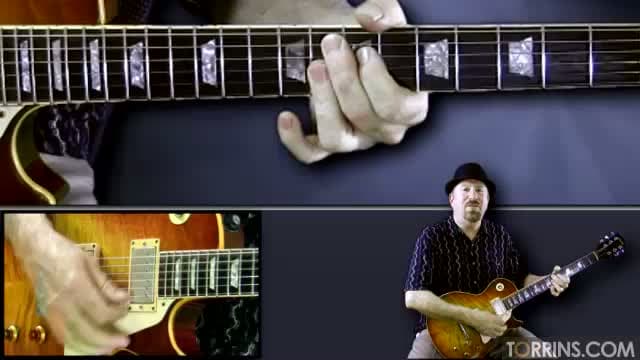
Intro Piece

Introduction
Torrins brings you an exciting guitar lesson on Insomnia by Rob Marcello, taught by the artist himself. This means you are learning the song's intricacies directly from the creator, giving you a unique insight into the techniques and creative choices behind this guitar masterpiece.
Fun Fact: Rob Marcello was quite young when he composed this song and admitted that he wasn’t fully familiar with advanced music theory at the time. While Insomnia may not have achieved mainstream chart success, it remains a respected piece within the guitar community.
Chords Used in Insomnia Guitar Lesson
- Intro: Intro is played in the key of G harmonic minor and uses a C minor arpeggio and triad. It also includes an F# chord along with other chords.
- Verse: Chords used: Gm, F/G. It’s a simple verse structure with basic licks. Practising this verse is a good exercise for picking accuracy.
- Chorus: In chorus, the key changes to C minor. This section involves arpeggios, sliding, and tapping
- Break Section: The key of G harmonic minor returns. It has a metal-style lick. One of the chords is a D chord.
- Classical Section: Has a key of G major. Ensure you have a clean note separation in this section. Tip: Lift each finger as you play.
- Pre-Solo Section: Some of the chords used are D major and E♭ major. This section involves sliding up the neck and is still in the key of G harmonic minor.
- First Solo: Base stays on G and includes F major arpeggio.
- Main Solo: It uses harmonic picking, a guitar technique where you pick a note while lightly touching the string to create a bright, bell-like overtone. The solo starts with blues licks played through a wah-wah pedal and follows a pentatonic blues box shape.
There are other segments in this song that cover Dominant 7 tapping lick, string skipping & pentatonic licks, and lastly, he ends the lesson by playing along with a backing track.
Why Learn Insomnia?
Insomnia is an excellent song for players looking to improve their left-hand legato, harmonic picking, and tapping techniques. It blends metal, blues, and classical influences, making it a well-rounded piece for guitarists aiming to develop technical precision and creative expression. It is better suited for advanced players.
Tips for Playing Insomnia:
- Pay attention to the rhythmic phrasing in the break section.
- Master the sliding and tapping techniques in the solos for a polished sound.
FAQs – Insomnia Guitar Lesson
Q1. Is this song beginner-friendly?
No, this lesson is suited for advanced players due to the complex techniques involved.
Q2. How can I master the classical section?
Ensure clean note separation by lifting each finger immediately after playing the note.
Insomnia
Intro Piece
Verse
Chorus
Break Section
Classical Section
Pre-Solo Section
First Solo
Main Solo
Dominant 7 Tapping Lick
String Skipping and Pentatonic Licks
Final Section
With Backing Track
Introduction
Torrins brings you an exciting guitar lesson on Insomnia by Rob Marcello, taught by the artist himself. This means you are learning the song's intricacies directly from the creator, giving you a unique insight into the techniques and creative choices behind this guitar masterpiece.
Fun Fact: Rob Marcello was quite young when he composed this song and admitted that he wasn’t fully familiar with advanced music theory at the time. While Insomnia may not have achieved mainstream chart success, it remains a respected piece within the guitar community.
Chords Used in Insomnia Guitar Lesson
- Intro: Intro is played in the key of G harmonic minor and uses a C minor arpeggio and triad. It also includes an F# chord along with other chords.
- Verse: Chords used: Gm, F/G. It’s a simple verse structure with basic licks. Practising this verse is a good exercise for picking accuracy.
- Chorus: In chorus, the key changes to C minor. This section involves arpeggios, sliding, and tapping
- Break Section: The key of G harmonic minor returns. It has a metal-style lick. One of the chords is a D chord.
- Classical Section: Has a key of G major. Ensure you have a clean note separation in this section. Tip: Lift each finger as you play.
- Pre-Solo Section: Some of the chords used are D major and E♭ major. This section involves sliding up the neck and is still in the key of G harmonic minor.
- First Solo: Base stays on G and includes F major arpeggio.
- Main Solo: It uses harmonic picking, a guitar technique where you pick a note while lightly touching the string to create a bright, bell-like overtone. The solo starts with blues licks played through a wah-wah pedal and follows a pentatonic blues box shape.
There are other segments in this song that cover Dominant 7 tapping lick, string skipping & pentatonic licks, and lastly, he ends the lesson by playing along with a backing track.
Why Learn Insomnia?
Insomnia is an excellent song for players looking to improve their left-hand legato, harmonic picking, and tapping techniques. It blends metal, blues, and classical influences, making it a well-rounded piece for guitarists aiming to develop technical precision and creative expression. It is better suited for advanced players.
Tips for Playing Insomnia:
- Pay attention to the rhythmic phrasing in the break section.
- Master the sliding and tapping techniques in the solos for a polished sound.
FAQs – Insomnia Guitar Lesson
Q1. Is this song beginner-friendly?
No, this lesson is suited for advanced players due to the complex techniques involved.
Q2. How can I master the classical section?
Ensure clean note separation by lifting each finger immediately after playing the note.
Insomnia
Intro Piece
Verse
Chorus
Break Section
Classical Section
Pre-Solo Section
First Solo
Main Solo
Dominant 7 Tapping Lick
String Skipping and Pentatonic Licks
Final Section
With Backing Track
Explore More in English Songs








Introduction
Want to learn some popular tunes from the mid-'90s? Torrins has got you covered! Tune into our guitar song lesson on James Taylor’s version of the 1959 hit Handy Man. This song tutorial is led by our expert teacher, Steve Luciano, who has decades of experience teaching and playing guitar. He breaks down the Handy Man lesson into chords, rhythm, and strumming patterns to make learning this song a smooth process for you.
Fun fact: Did you know this song has been a hit twice? Handy Man was originally recorded by Jimmy Jones in 1959 and became a huge success, reaching #2 on the Billboard Hot 100. Nearly two decades later, James Taylor recorded his own mellow, acoustic version in 1977, which also became a hit, peaking at #4 on the Billboard Hot 100 and earning Taylor a Grammy Award for Best Male Pop Vocal Performance. How cool is that?
This version of Handy Man is a great example of James Taylor’s signature acoustic fingerpicking style, incorporating unique harmonies and intricate transitions. If you’re looking for a simpler version, we’ve got that too—check it out on the Torrins website!
Chords Used in Handy Man Guitar Lesson
This song is played in the key of D and features some interesting chord transitions. Here are some of the key chords used:
- Main chords: D, A, and some others.
- When reharmonizing the second verse: Em, F#m7
- Slash chords to add depth and movement: A/C#, G/B, and a few others.
Tune into the complete Handy Man song lesson to know the rest of the chords.
Steve breaks down unique chord transitions specific to this song to help you capture its distinct, smooth sound.
Fingerpicking & Strumming Techniques
Unlike traditional fingerpicking, Handy Man features more of a plucking style—playing bass notes while plucking the strings together for a fuller sound.
- The song starts with pickup notes and incorporates hammer-ons to add subtle dynamics.
- If you’re not comfortable with fingerpicking, you can strum the entire song instead. It still sounds great!
Song Structure & Rhythm
This song follows a classic verse-chorus format.
- Keep an eye on chord transitions, especially when moving between slash chords, as they add a unique colour to the song.
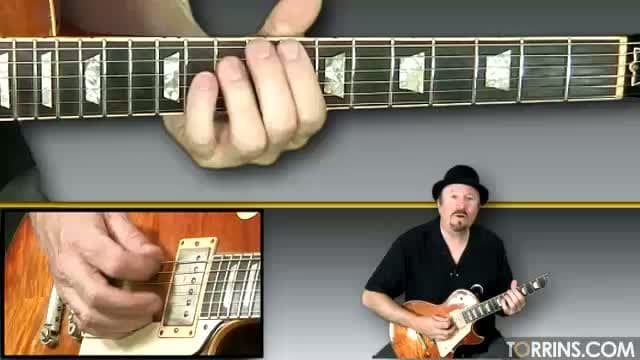
- The multi-angle camera views (focused on fretting, strumming, and a complete overview) help you get a clear, close-up look at all movements –making learning much faster and more effective.
- Make use of tabs and lyrics for a smoother and more structured learning experience.
Why Learn the song Handy Man on guitar?
James Taylor’s Handy Man is a fantastic piece for learning fingerpicking while maintaining a steady rhythm. Plus, it’s an excellent exercise for improving chord transitions and adding finesse to your playing.
FAQs – Handy Man Guitar Lesson
Q1. Do I have to use fingerpicking?
You can strum the entire song if you prefer. However, fingerpicking brings out its full depth.
Q2. How can I make my transitions smoother?
Steve shares specific techniques for transitioning between chords effortlessly. Practising slowly and focusing on finger positioning will help.