Belle
Introduction
Song Arrangement
Song Demo
Accordian Solo
No Description Available
Belle
Introduction
Song Arrangement
Song Demo
Accordian Solo
Explore More in English Songs





Introduction:
Torrins brings you an electrifying guitar lesson—Symphony of Destruction by Megadeth, taught by Clay Foster. This heavy-hitting metal track is part of our guitar song lesson series and is broken down into easy-to-follow sections.
Fun Fact: In an interview, vocalist Dave Mustaine shared that the lyrics for Symphony of Destruction were sparked by a headache he got while driving home. He scribbled the first lines on the back of a sushi receipt—“My metal brain’s corroding, my head is going to explode.” That spontaneous moment led to one of Megadeth’s most iconic songs, recorded on their fifth studio album Countdown to Extinction in 1992.
Song Arrangement
The song is taught in separate segments so you can master each part before moving to the next.
The song is in the key of E.
Verse
Verse is built around the F power chord and an open E power chord, along with other chords.
Downstrokes and palm muting are used in the verse—make sure to mute the strings to avoid letting notes ring out too long. Clay shares techniques like using your thumb or extra fingers to stop the sound cleanly.
Pre-Chorus
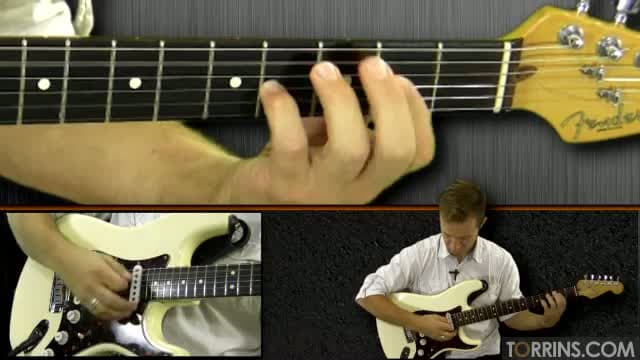
Features open palm muting and chromatic downs, creating that tight, chugging rhythm. Our lessons have a 3-angle video setup so you can clearly see hand positions and copy along easily.
Chorus
This section opens up with ringing E chords and a chromatic descending run. Chords like Bb, G#, and the D power chord makes the chorus sound more intense. Though it’s slightly more complex than the verse, Clay carefully breaks down the finger positioning and covers some fingerpicking techniques to help you through it.
After the first chorus, the main riff returns and leads into the second verse and pre-chorus, just like earlier.
The second chorus is a bit longer. The first half mirrors the first chorus, while the second half introduces new elements. Clay walks you through the difference so you can follow along confidently.
Solo Lesson
Clay breaks down the guitar solo into manageable sections.
- The first part has a bluesy riff with vibrato, bending, and palm muting.
- The second part is a 16-note rhythmic figure built around the Am6 chord, featuring some sliding techniques.
- Tune into the lesson to learn each section in detail and pick up essential phrasing skills along the way.
Sound and Tone
To capture the song’s feel, Clay dives into the tone settings. The tone is mid-rangy, which is a signature sound of Marty Friedman. Clay recommends listening to some of Friedman’s work to understand the sweet, expressive tone he’s known for.
For gear settings, Clay suggests using the middle pickup to replicate that tone more accurately.
Song Demo
The lesson wraps up with a full song demo, where Clay ties everything together. You can play along with him to practice transitions, polish your technique, and check your accuracy in real time.
FAQs – Symphony of Destruction Guitar Lesson
Q1: Is this song beginner-friendly?
Yes. While it has a few technical sections, the lesson breaks everything down clearly and provides enough guidance for newer players.
Q2: Do I need specific gear for the tone?
Clay suggests using a mid-range-focused setting with the middle pickup to get closer to Marty Friedman's tone. However, you can start with what you have and tweak as needed.
Q3: Is the solo hard to learn?
It’s approachable when broken into parts. Clay walks you through each phrase, so with some practice, you’ll be able to nail it.






Similar Rock Songs
Introduction
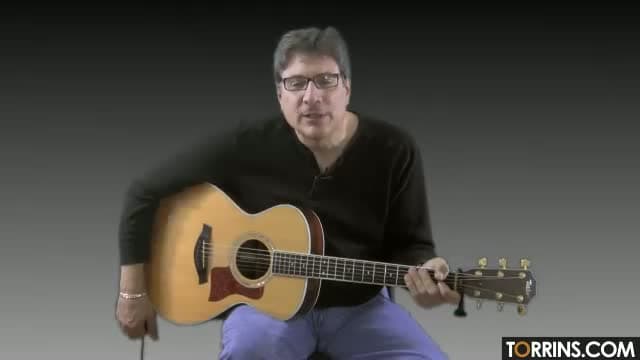
Torrins brings you a detailed guitar lesson on another late-1990s rock hit, Jumper, by the American rock band Third Eye Blind. In this tutorial, our expert instructor, Steve Luciano, breaks down this acoustic power pop song, sharing valuable insights to help you master it on guitar.
This guitar song tutorial covers Intro, Chords, Rhythm, and comes with Tabs and Lyrics for an all-rounded playing and learning experience.
Chords Used in Jumper Guitar Lesson
This song features a mix of open and extended chords, creating a rich and dynamic sound.
The song is originally written in the key of C major and has a time signature of common time and a tempo of 88 beats per minute.
Steve Luciano teaches this song using 5 chords two of which are Fmaj7/C and D4add9. Check out the complete lesson to know the rest.
Chords used: Fmaj7/C and D4 add 9
Steve shares a simple hack to play D4add9, making it easier to transition smoothly between chords. He also covers detailed finger positioning to ensure clarity in each chord change.
Strumming Pattern
Pattern: DDDUDUUD
The song follows a 4/4 time signature, but what makes it unique is the 16th note rhythm in the intro. Your right hand moves four times as fast, but you don’t have to hit the strings every time—just keeping your hand moving at that pace gives the desired groove. Steve breaks down this technique in the lesson to help you nail the feel of the song.
Song Structure
This song follows a verse-chorus format, with rhythmic variations adding energy to different sections.
- Verse: The first measure contains two chords, while the next measure is a full measure of one chord.
- Chorus: Features a groovier and faster rhythm, helping you develop better control in your right hand.
- Muting Technique: In parts of the song, Steve demonstrates how to mute the strings while playing Fmaj7/C, creating a percussive effect. If you struggle with this, he also teaches an alternative approach.
Why Learn the Jumper song on guitar?
- Improves right-hand independence and left-right hand coordination for smoother transitions.
- Teaches unique strumming techniques that add groove and freshness to your playing.
- Helps develop speed and precision, making your playing sound more natural and effortless.
Tips for Playing the Jumper Song Smoothly on Guitar
- Practice chord transitions first before focusing on strumming.
- Loosen your grip to achieve proper string muting in certain sections.
- Focus on feeling the rhythm, especially during faster, groove-heavy parts.
FAQs – Jumper Guitar Lesson
Q1. Is this song beginner-friendly?
A: The Jumper song on guitar is best suited for intermediate players due to its faster rhythm and complex strumming patterns.
Q2. What if I struggle with the faster rhythm?
A: In that case, practice the strumming motion slowly first before speeding up. The key is keeping your right hand moving consistently.
Recording Fun Fact: For Jumper, Stephan Jenkins wanted a deep, thudding drum sound, so they recorded in a small room with the doors open for a natural "breathing" effect. He even had drummer Brad Hargreaves switch to smaller sticks for a more controlled feel, kind of like a Beatles-style recording trick!


Introduction
Learn the famous “I Shot the Sheriff” on Torrins, led by our expert instructor Steve Luciano, who has decades of experience playing and teaching guitar. “I Shot the Sheriff” is originally a reggae song written by Bob Marley and released in 1973 with his band, The Wailers. However, you'll be playing Eric Clapton’s version of this song with Steve on Torrins.com. Eric recorded his cover in 1974 for his album 461 Ocean Boulevard. His performance of the song adds soft rock to the reggae sound, giving it a unique feel.
The difficulty level of this guitar lesson ranges from beginner to intermediate and breaks down the chords, rhythm, structure, and strumming pattern in a simple yet engaging way! So, tune in and unfold the magic of this hit cover!
Steve Luciano teaches the I Shot The Sheriff Song guitar lesson using 4 movable chords: Gm, Cm, Eb, and Dm. No capo is needed!
Chords Used in I Shot the Sheriff Guitar Lesson
This song is played using movable chords, which are common in reggae music.
Chords used: Gm, Cm, Eb, Dm
Steve teaches essential finger positioning and movement techniques to help make chord transitions smoother. He also demonstrates how to lighten finger pressure to achieve the signature reggae "deadening" effect on the strings.
Strumming Pattern
Pattern: D-U-D-U
- Like other reggae songs, this one emphasizes playing on the downbeat but feeling the upbeat to capture its groove.
- It’s good if you practice the chords first before adding rhythm, as some transitions can be tricky.
Song Structure
This song follows a verse-chorus format:
- Verse: The beginning of the song primarily uses Gm and Cm chords.
- Chorus: Introduces the Eb chord, which can be challenging for some players. Steve demonstrates easier ways to play Eb, particularly for those with larger fingers.
- The chorus chord progression repeats five times.
- At the end of the chorus, there's a signature single-note tag based on the Gm pentatonic scale. This lick is played each time the chorus ends.
Improvisation Techniques
- The song features a signature lick at the end of the chorus, based on the Gm pentatonic scale. Steve breaks down how to play the notes smoothly to maintain the song’s groove.
Why Learn I Shot the Sheriff on Guitar?
- Learning this song can help you master movable chord shapes commonly used in reggae.
- It will also help you improve reggae-style strumming and chord muting techniques.
- Additionally, it provides insight into lead guitar phrasing with the signature pentatonic lick.
Tips for Playing the Song Smoothly
- Practice chord transitions first before adding strumming.
- Loosen your grip to achieve the proper reggae deadening effect.
- Feel the upbeat while strumming for an authentic reggae sound.
FAQs – I Shot the Sheriff Guitar Lesson
Q1. Is this song beginner-friendly?
A: It’s suitable for intermediate players, as it uses movable chords, which may be challenging for beginners.
Q2. What if I struggle with the Eb chord?
A: Steve demonstrates easier alternatives for players who find it difficult, especially those with larger fingers.
Fun Fact: “I Shot the Sheriff” was originally a spiritual metaphor for birth control, though Bob Marley never revealed which lyrics were true. Eric Clapton’s 1974 cover became a massive hit, introducing Marley’s music to rock audiences worldwide. While Marley was happy with the cover, he was frustrated that the song was widely misinterpreted as an anthem against injustice and corruption rather than its original meaning.